
Cider & Sausage festival 2012
Clovelly Bat Inn
Plymouth
Friday 20th & Saturday 21st July 12 Noon - 11pm 2012
Finest real ciders, perries ales farm sausages, BBQ live music and merriment
Clovelly Bay Inn, Boringdon Road Turnchapel Plymouth PL9 9TB
01752 402765
Thursday, May 03, 2012
Cider & Sausage festival 2012

Wednesday, May 02, 2012
HopeCiderfest2012

1st HOPE CIDER FESTIVAL Friday 18th May - Woodchester Mansion, Stonehouse, Gloucestershire, GL10 3TS,
Large selection of locally produced ciders and perries, apple pressing,music, food.
http://ukcider.co.uk/wiki/index.php/Current_events#May_2012
Friday, November 18, 2011
11/18 ukcider
---------- Forwarded message ----------
From: Feed My Inbox <updates@feedmyinbox.com>
Date: 18 November 2011 07:58
Subject: 11/18 ukcider
To: aroberts@gmail.com
From: Feed My Inbox <updates@feedmyinbox.com>
Date: 18 November 2011 07:58
Subject: 11/18 ukcider
To: aroberts@gmail.com
|

Monday, January 17, 2011

Thursday, October 14, 2010
Nava Sidra Spanish Cider
Natural Spanish cider from Nava in Asturias, where much but not all of the Spanish Sidra Natural comes from.

Tuesday, September 28, 2010
29 new varieties of English cider apples
The new apple varieties are Lizzy; Prince William; Amelia; Amanda; Jenny; Hastings; Connie; Helen's Apple; Three Counties; Jane; Tina; Early Bird; Vicky; Naomi; Nicky; Angela; Gilly; Willy; Joanna; Maggie; Hannah; Jean; Sally; Fiona; Shamrock; Tracey; Eleni; Betty and Debbie.
New cider apple varieties
Monday, September 27, 2010
BBC R4 Food and Farming Awards Henney's Cider
Well Done Mike Henney of Henney's Cider for being a finalist.
BEST DRINKS PRODUCER
Mike Henney (Henney's Cider)
Mike Henney started making cider as a hobby in his airing cupboard in 1996. He now produces over 200,000 gallons of his high-quality product. He maintains traditional methods of production, using genuine cider apple varieties from local Herefordshire growers. His four varieties of cider are available in leading supermarkets.
http://www.bbc.co.uk/radio4/features/ffa/2010/finalists/Results will be announced on November 24th at the BBC Good Food Show in Birmingham.
The Awards programme will be on Radio 4 at 9am on November 26th.
Good Luck for the final!
Saturday, September 25, 2010
Recipe: Pork Chops with Cider and Apples
This is the American version of Pork with cider and apples.
Pork Chops with Cider and Apples
Makes 4 servings
1 tablespoon olive oil
4 center-cut boneless pork chops, 6-7 ounces each
3/4 teaspoon salt
Freshly ground pepper
2 shallots, minced
2 cups hard or sweet cider
1 cup dried apple slices
3 tablespoons whipping cream
2 teaspoons spicy brown mustard
1. Heat olive oil in a large skillet over medium-high heat; season chops with 1/2 teaspoon of the salt and pepper to taste. Cook chops in skillet, turning once, until browned, and almost cooked through. Remove from skillet.
2. Add shallots to skillet; cook over medium heat until translucent, 2 minutes. Add cider; heat to a simmer. Add apple slices; cook until apples are soft and cider is reduced by half, about 10 minutes. Stir in cream, mustard and remaining 1/4 teaspoon of the salt; cook until slightly thickened. Taste sauce for seasoning. Return chops to skillet; heat until chops are cooked through.
Nutrition information
Per serving: 441 calories, 46 percent of calories from fat, 23 g fat, 8 g saturated fat, 105 mg cholesterol, 31 g carbohydrates, 28 g protein, 729 mg sodium, 2 g fiber
The basic method is sound, and you can make variations with different types of cider, cuts of pork and whether or not to add cream for example. Seems a lot of people have discovered how well pork and cider go together, but there's alwas someone else looking for a recipe. Do you like following recipes or just cook pork and cider with the best ingredients you can find?
Monday, September 20, 2010
Vintage Apple Fruit Crusher Scatter For Cider Making
This is a vintage fruit crushing machine, mostly useful as an item of interest although it's likely you could just about get it to work as an apple scratter for making cider 
via cgi.ebay.co.uk
When you first start looking up information on how to make cider you may come across machines like these, but they're more like collectors' items really. You can start off with something easier and smaller.
Monday, September 13, 2010
Friday, September 10, 2010
Britain's Oldest Cidermaker Frank Naish
A picture of Frank Naish from Naish Cider which James Russel has used as an illustration in his Naked Guide to Cider Book 
We need to document all of these old cidermakers while they are still with us.
Saturday, August 28, 2010
Tax on alcohol should rise by ten per cent: charity - Telegraph
Secondary legislation has already been introduced to increase the tax on cheap, strong ciders. This legislation will change the definition of cider by introducing a minimum juice content to qualify to pay duty at the cider rates. Products with low juice content are now taxed at the more appropriate made-wine rate.
via telegraph.co.uk
The government seem to have got the idea that introducing a minimum juice content will reduce the amount of cheap alcohol on sale, but medical charities are pointing out that the current tax bands are not sufficiently related to alcohol content at all and there remains some serious anomolies. A minimum juice content for cider is a good idea but at 35% this is laughable. It should be more like 85% which is the figure for real cider and anything less shouldn't really be called cider at all
Watered Down Cider Definition backed by NACM
|
Friday, August 27, 2010
Green Goblin by Thatchers
"Me and Maria tried an oak aged cider from Wychwood. I wasn't aware of that they brewed on other bases than malt."
Seems to be made by Thatchers Cider on behalf of the Hobgoblin Brewery

Seems to be made by Thatchers Cider on behalf of the Hobgoblin Brewery
Wednesday, August 25, 2010
BBC News - Poor pear harvest in Herefordshire for perry cider
There could be less Real Perry next year if this report comes true. Tom Oliver from Oliver's Cider and Perry is experiencing smaller crops of perry pears this year, which is bad news for perry drinkers.


via bbc.co.uk Perry comes from perry pears which are smaller and more acidic than other types. Conventional pear cider comes from a sweeter variety.
I think they'll get by using the old perry pear trees in people's gardens and farms all over Herefordshire that haven't been used for perry for years.
Tuesday, August 24, 2010
Mad Apple Czeck Cider
I suppose it's only a matter of time before this Mad Apple Czech cider arrives in the UK and gets added to the so called Cider Festivals that some of the local pub chains organise. I bet they do a strawberry flavoured mad apple too. 
Wednesday, August 18, 2010
Apple Press
Apple Press
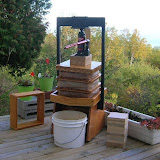
An apple press is not intended to press whole apples, but to make apple juice out of crushed, minced or grated apples. The juice form the apple press can then be fermented to make cider.
An apple press is not intended to press whole apples, but to make apple juice out of crushed, minced or grated apples. The juice form the apple press can then be fermented to make cider.
Friday, August 06, 2010

Friday, June 25, 2010
Old Rascal
Thatchers Old Rascal at the Stockport beer and cider festival.
The old rascal of legend is a fox that used to creep out of his den at night to steal cider.
Old Rascal is a fine bittersweet cider, produced from some of Somerset’s best cider apples, Dabinett and Redstreak. Aged in our oak vats, Old Rascal is made from a traditional Thatchers’ recipe.
Its popularity as a session cider is combined with all the hallmarks of a distinctive Thatchers product full of flavour and a West Country apple bite.
Packaged in lightweight 500ml bottle, Old Rascal was reintroduced in 2008. “Old Rascal has always appealed to older, more traditional drinkers. With cider now attracting a much wider audience, we feel it’s time to introduce the Old Rascal to them too!” said Thatcher.
Old Rascal has an ABV of 4.5%
Thatchers Old Rascal Scrumpy is different, that's a draught cider also made from English apples. It's matured in oak vats to produce a full bodied farmhouse cider at 6.0% vol

The old rascal of legend is a fox that used to creep out of his den at night to steal cider.
Old Rascal is a fine bittersweet cider, produced from some of Somerset’s best cider apples, Dabinett and Redstreak. Aged in our oak vats, Old Rascal is made from a traditional Thatchers’ recipe.
Its popularity as a session cider is combined with all the hallmarks of a distinctive Thatchers product full of flavour and a West Country apple bite.
Packaged in lightweight 500ml bottle, Old Rascal was reintroduced in 2008. “Old Rascal has always appealed to older, more traditional drinkers. With cider now attracting a much wider audience, we feel it’s time to introduce the Old Rascal to them too!” said Thatcher.
Old Rascal has an ABV of 4.5%
Thatchers Old Rascal Scrumpy is different, that's a draught cider also made from English apples. It's matured in oak vats to produce a full bodied farmhouse cider at 6.0% vol
Sunday, May 23, 2010
Addlestones Cider
Addlestones Cider - cloudy and refreshing but with a tang to the aftertaste, possibly caused by artificial sweeteners. Not a full juice real cider.

Subscribe to:
Posts (Atom)